
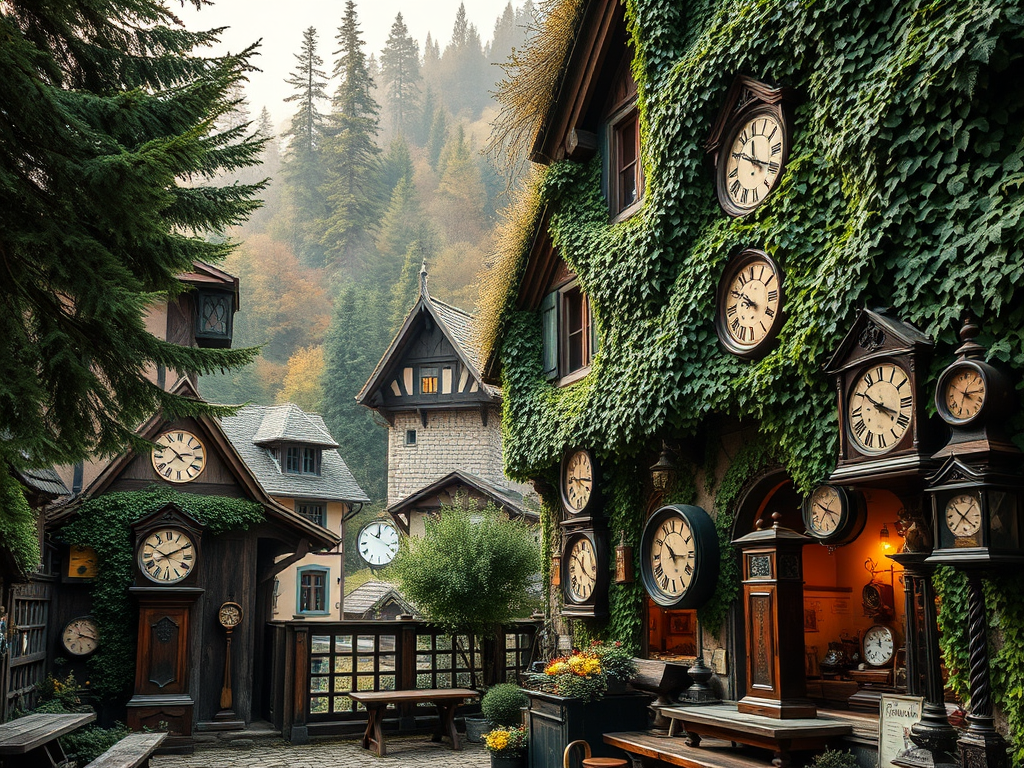
In the quiet Bavarian town of Altenberg, nestled in a valley surrounded by towering pines, the ticking of clocks was a constant companion. At its heart stood Klaus Müller’s workshop, a quaint, ivy-covered building filled with an extraordinary collection of timepieces. Klaus was a master clockmaker, a man whose craft seemed almost otherworldly.
The villagers often marveled at his work, claiming his clocks were not just accurate but imbued with an inexplicable vitality. What they didn’t know was that Klaus guarded a secret—a secret handed down through generations of Müller clockmakers.
Hidden in a locked room at the back of the workshop, accessible only through a peculiar brass key, lay the Eternity Clock. It was no ordinary timepiece. This ancient artifact, its surface adorned with swirling engravings and constellations, was said to have been crafted by an alchemist centuries ago. The clock did not merely measure time; it controlled it.
Klaus had discovered its power as a young apprentice. One evening, while polishing its ornate casing, he noticed that the clock’s hands moved erratically. Moments later, he found himself reliving the same minute over and over until he turned the key embedded in its base. Since then, Klaus had learned to wield the Eternity Clock with great caution.
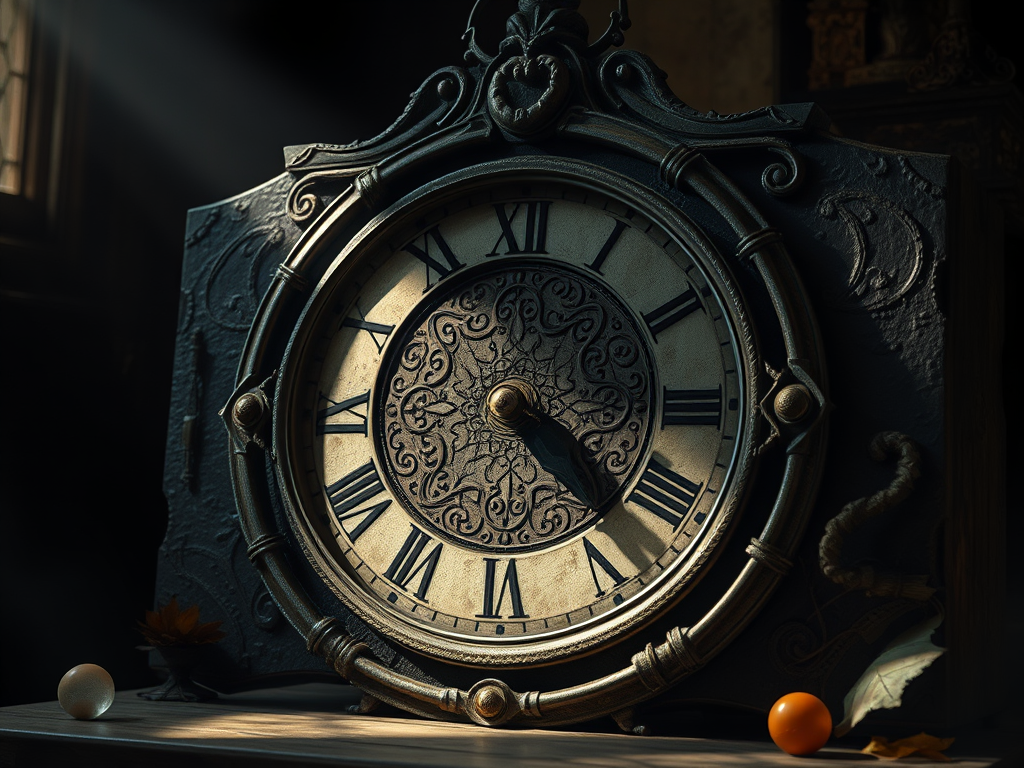
The artifact allowed its keeper to bend time: slow it, pause it, or, in rare cases, reverse it briefly. But there was a cost. Each use drew upon the lifeforce of the user, a price Klaus’s father had paid dearly. Klaus vowed to keep the clock hidden, using it only in the gravest of circumstances.
Years passed, and Altenberg remained peaceful. But one autumn, a series of disasters befell the town. A fire consumed the granary. The mayor fell ill with a mysterious fever. And worst of all, Klaus’s beloved daughter, Annalise, was struck by a carriage while playing in the street.
The accident left her comatose, her breaths shallow and labored. The town doctor offered little hope. Devastated, Klaus sat by her bedside, the ticking of the Eternity Clock echoing in his mind. He had sworn never to use it again. But now, faced with the prospect of losing Annalise, he unlocked the secret room.
As Klaus turned the key in the clock’s base, its hands began spinning backward. The workshop blurred around him, as though the world itself were rewinding. He stopped the clock just moments before the accident.

Racing into the street, Klaus called out to Annalise, pulling her to safety just as the carriage thundered past. She looked at him, bewildered but unharmed. Klaus felt a surge of relief—but also a pang of weakness in his chest. He knew the price of his actions.
The town returned to normal, unaware of what Klaus had done. But he wasn’t the same. The clock had taken a part of him, and he aged visibly in the weeks that followed. Annalise noticed the change and pressed him for the truth. Reluctantly, Klaus revealed the clock’s existence.
“Promise me you’ll never use it,” he said, his voice weary. “Its power is both a gift and a curse.”
Years later, as Klaus lay on his deathbed, he handed the brass key to Annalise. “Keep it hidden,” he whispered. “And remember: time is precious, not to be trifled with.”

Annalise honored her father’s wish for many years, keeping the Eternity Clock locked away. But on the eve of a great war that threatened Altenberg, she found herself standing before the secret room, the brass key trembling in her hand.
The legacy of the clockmaker weighed heavily upon her.



 Read, Write, English!