
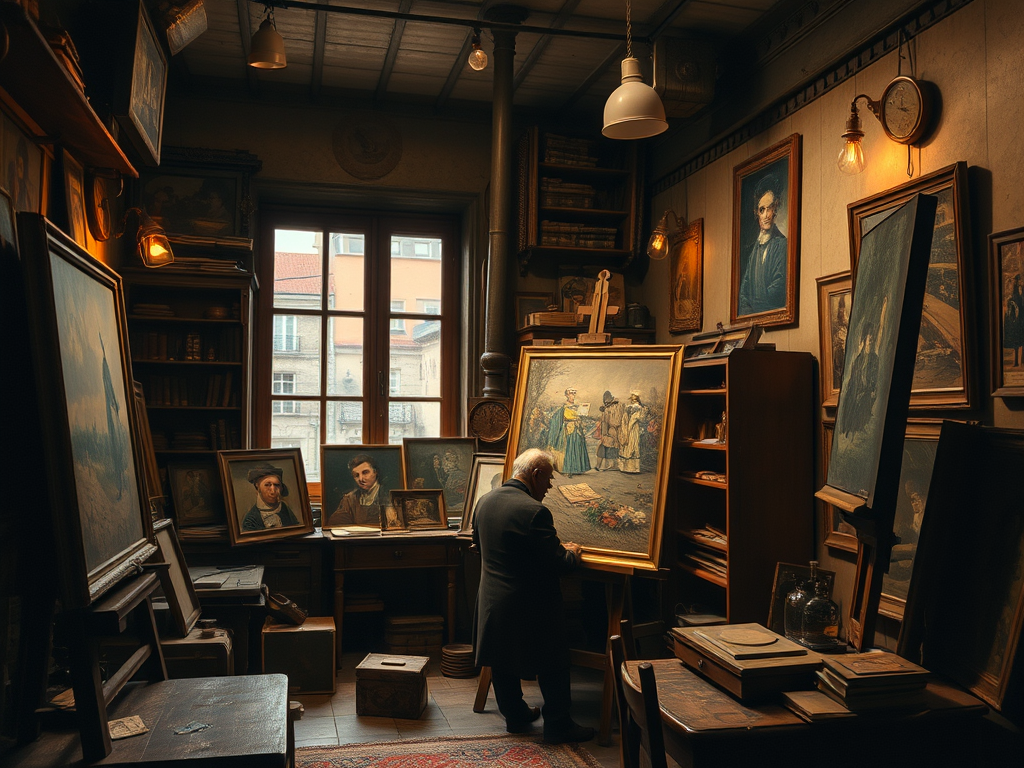
In a bustling Parisian neighborhood during the early 1900s, there was a small, unassuming atelier at the end of Rue Saint-Étienne. The workshop belonged to Émile Rousseau, a reclusive painter known not for his fame but for his uncanny ability to capture emotions on canvas with unsettling accuracy. Émile’s works were sought by those desperate for closure—families mourning a loved one, lovers parted by cruel circumstances, or those who had simply lost their way in life.
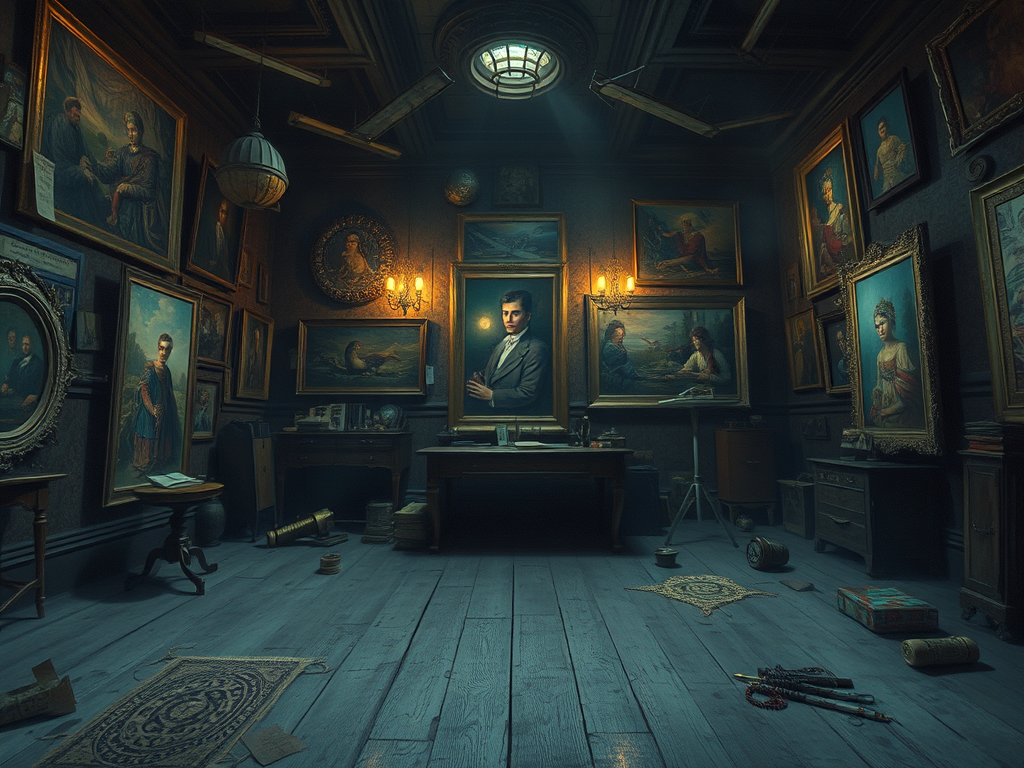
Yet, Émile’s greatest works were never for sale. They were stored in a locked room at the back of his atelier, hidden even from his most trusted clients. These were not just paintings; they were dreams, fragments of lives untold and futures unfulfilled.
Émile’s extraordinary gift began to manifest after a fateful event in his youth. As a young man, he had been a promising artist at the École des Beaux-Arts. One summer, while exploring the countryside near Giverny, he stumbled upon an elderly woman painting by the Seine. Her work was unremarkable, but her aura was magnetic.
She introduced herself as Marguerite and claimed to paint not what she saw, but what others had lost. Intrigued, Émile spent weeks learning from her. She taught him to listen—to truly hear the echoes of human longing. Before she disappeared one autumn morning, she handed him a set of peculiar brushes, their bristles glinting faintly as though kissed by moonlight.

From that moment on, Émile’s art transformed. His first painting, completed shortly after Marguerite’s departure, depicted a child running through a meadow. The buyer, a grieving mother, broke into tears. “That’s my son,” she whispered. “He passed away last spring.”
Émile’s reputation grew, but so did the weight of his gift. The dreams he painted began to haunt him. Each stroke on the canvas felt like a tether to another life, another story left unresolved. He vowed to only use the brushes for those who needed his help the most.
One winter evening, a man named Antoine Dupont arrived at the atelier. Antoine was a wealthy industrialist, but his eyes betrayed a profound sadness. “I’ve come to you because I can no longer dream,” he said, his voice tinged with desperation.

Émile hesitated. Painting dreams was dangerous; it required a deep connection to the subject’s soul, and it often left him drained. But something in Antoine’s plea moved him.
They began the process the next morning. Antoine described fragments of his past—a carefree childhood, a love he had lost, ambitions he had abandoned. Émile listened intently, letting the brushes guide him. Over several days, a masterpiece took shape: a vivid scene of Antoine as a young man, standing on a sunlit hill, his arms open wide as though embracing the world.
When the painting was complete, Antoine stared at it for a long time. Tears welled in his eyes. “This is me,” he said, his voice trembling. “This is the man I used to be—the man I still long to be.”
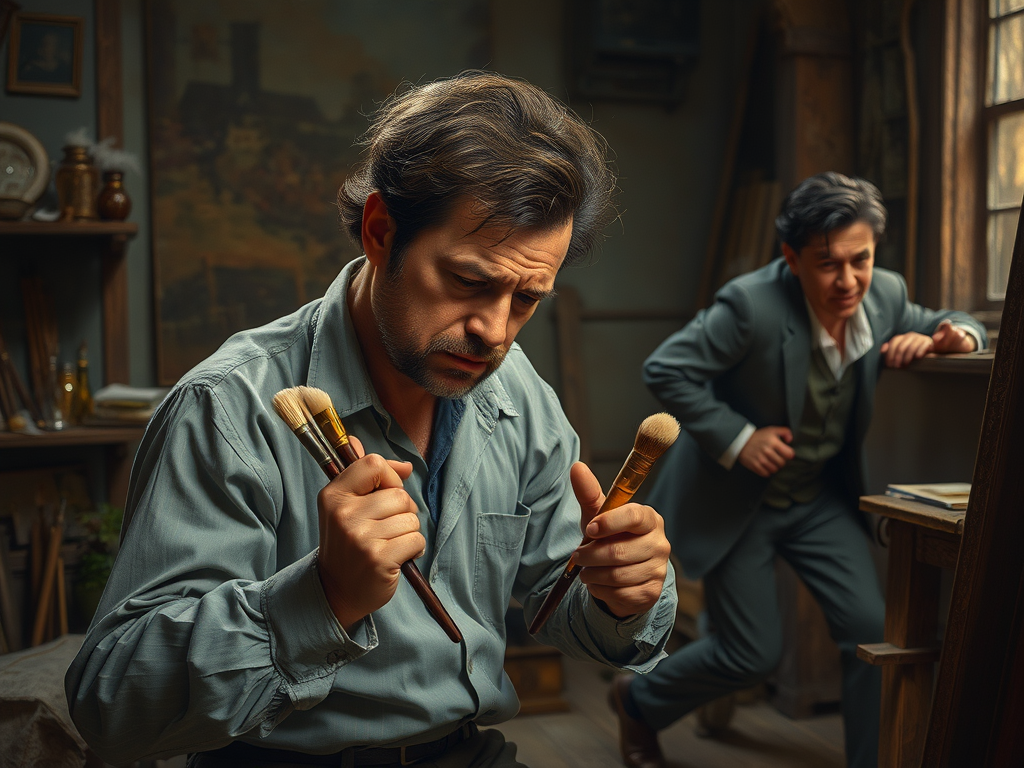
But something was wrong. As Émile cleaned his brushes, he noticed the bristles had dulled, their faint glow extinguished. A sharp pain shot through his chest, and he staggered. Antoine rushed to his side.
“You’ve given me back my dreams,” Antoine said. “But at what cost?”
Émile smiled faintly. “Dreams are powerful things,” he whispered. “They can inspire life—or consume it.”
Antoine offered to take Émile to a doctor, but the painter refused. “There’s one last thing I must do,” he said.
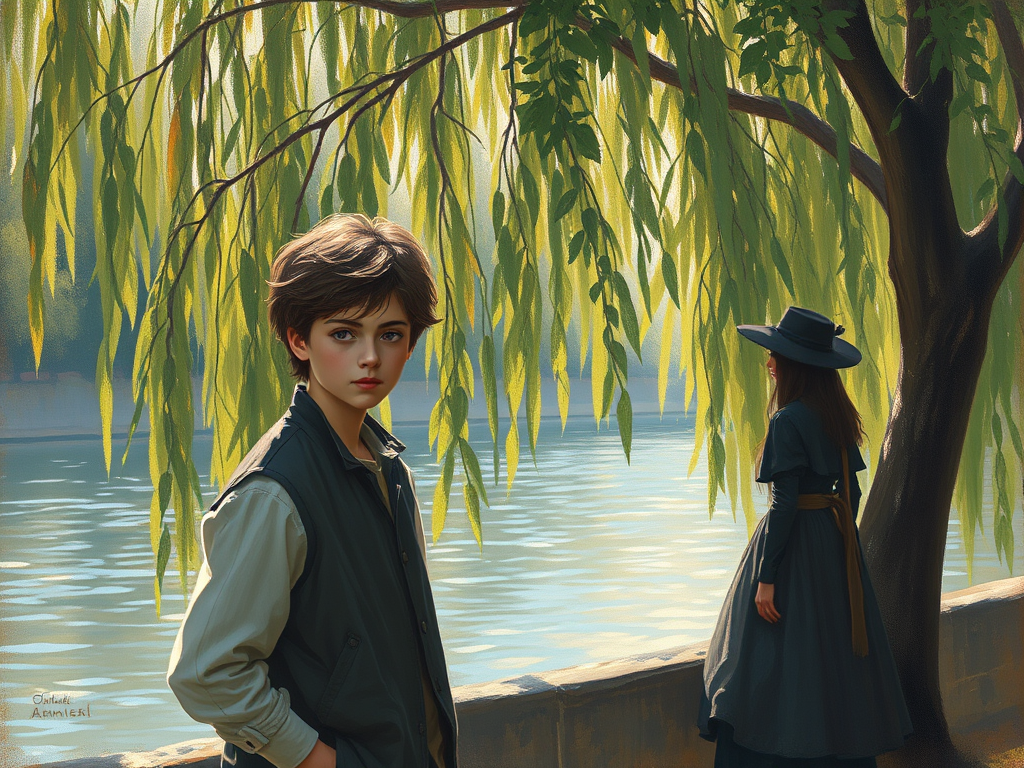
With trembling hands, Émile began his final work. It was a self-portrait, but not of the man he had become. The painting depicted a younger Émile, standing by the Seine, gazing at a mysterious woman painting under the shade of a willow tree.
When the last stroke was complete, Émile slumped in his chair, his heart still, his face serene.
Antoine, moved by the painter’s sacrifice, vowed to preserve the atelier. He left the locked room untouched, its contents a mystery to all but Émile. The painter’s legacy endured, his works a testament to the power—and peril—of dreams.



 Read, Write, English!